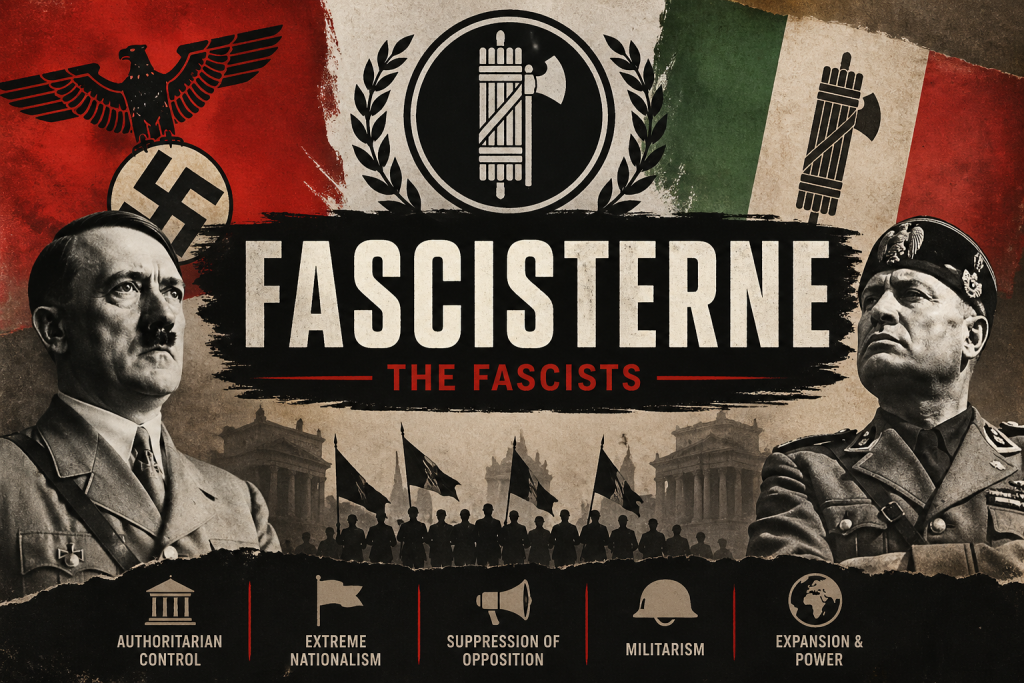
It refers to people or groups who support fascism, a far-right authoritarian political ideology linked with dictatorship, extreme nationalism, and suppression of opposition. It may be famous because “Fascisterne” can appear in history discussions, politics, documentaries, books, or social media posts about World War II and European history.
Since the word means “the fascists,” people often use it when talking about past regimes such as Benito Mussolini in Italy or Adolf Hitler in Germany.
If you saw it trending somewhere specific, tell me where, and I can explain why it became popular there.
Relation with world war II
Fascisterne means “the fascists.” It is related to World War II because fascist governments helped cause the war.
Main examples:
- Benito Mussolini ruled Italy under fascism.
- Adolf Hitler ruled Germany with a related extremist ideology called Nazism.
- These aggressive regimes expanded territory and used military force, which led to conflict.
So when people say Fascisterne in a WWII context, they usually mean the fascist powers or supporters involved in the war.
Reason
The word Fascisterne simply means “the fascists.” It is not a group with one official purpose, but it describes people who follow fascism.
In general, fascist movements aimed to:
- Create a strong, centralized state led by a powerful leader
- Promote extreme nationalism (putting their nation above others)
- Maintain strict control over society and politics
- Suppress opposition and limit political freedom
- Expand power, sometimes through military force
During World War II, fascist governments like those of Benito Mussolini in Italy and Adolf Hitler in Germany followed these ideas, which led to major global conflict.
So, the “purpose” depends on context, but historically it refers to enforcing authoritarian control and national power above everything else.
Leading
“Fascisterne” doesn’t refer to one single organization today, so there is no current leader.
Historically, during World War II, fascist movements were led by different dictators in different countries:
- Benito Mussolini led fascism in Italy
- Adolf Hitler led Nazi Germany in Germany
So instead of one leader, fascism in the past had multiple leaders depending on the country.