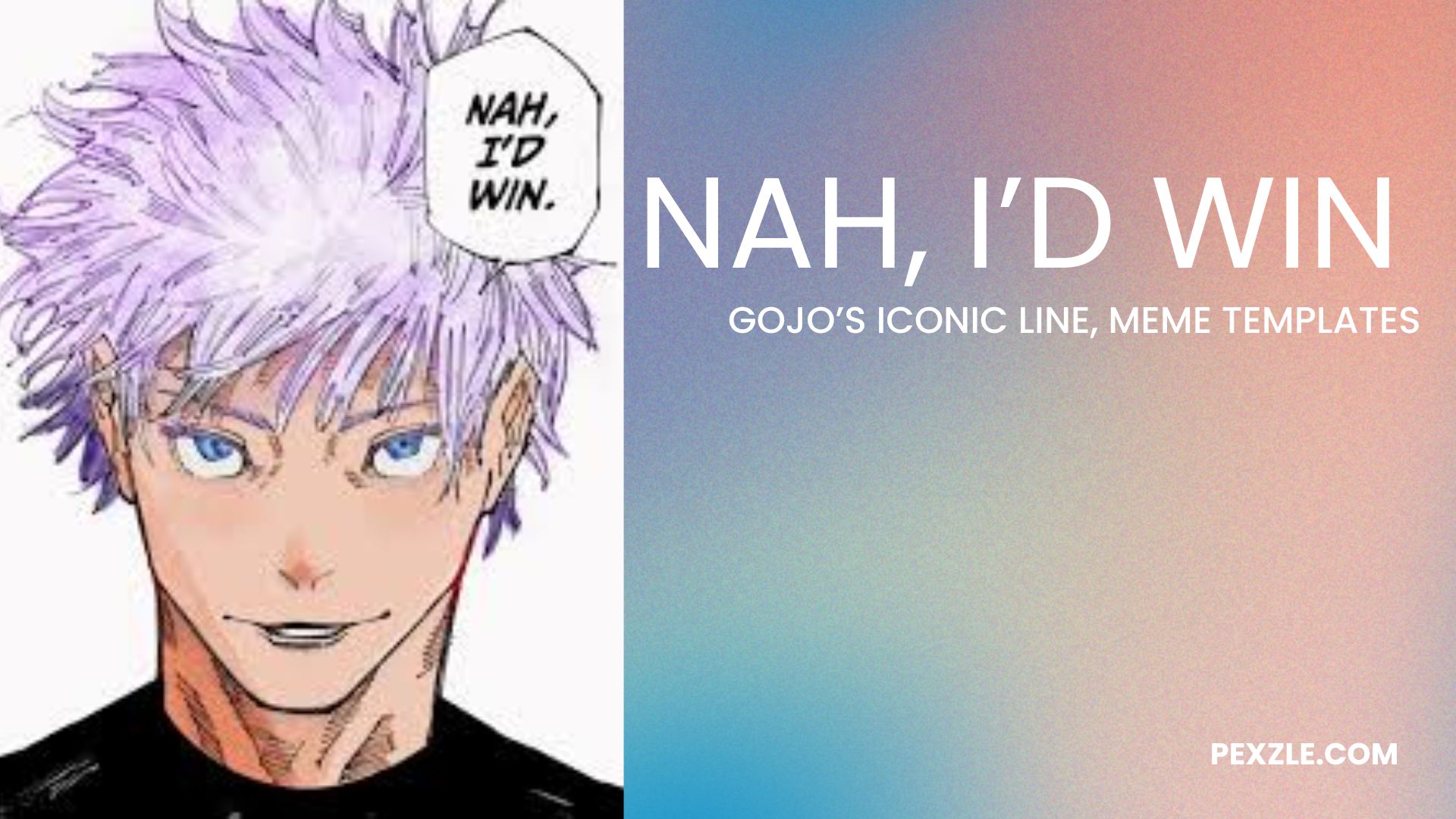
What started as a single confident line from Satoru Gojo in Jujutsu Kaisen has transformed into a global trend used in humor, edits, debates, and even motivational content.
This article explores the origin, meaning, Gojo panel, meme templates, facial expression, and why it dominates internet culture—all in a fresh, SEO-friendly, and completely original way.
Origin of Nah, I’d Win
The line comes from a manga panel in Jujutsu Kaisen where Gojo is asked whether he could defeat a powerful opponent. His response:
Nah, I’d win.
This moment perfectly captures Gojo’s personality—calm, unbeatable, and slightly arrogant. The simplicity of the line, combined with his overwhelming confidence, made it instantly memorable among fans.
The Gojo Panel started that all
The original manga panel plays a huge role in the meme’s success. It features:
- Gojo’s relaxed posture
- A composed, almost casual expression
- Minimal dialogue with maximum impact
This panel became the foundation for meme templates, often edited or recreated across different formats.
The Nah, I’d Win Face Explained
A big reason behind the meme’s popularity is Gojo’s facial expression:
- Slight smirk or neutral confidence
- No signs of stress or doubt
- Calm eyes that suggest total control
This “Gojo face” is now widely used as a reaction image to represent:
- Overconfidence
- Ironic bravery
- Effortless dominance
Fans often recreate this expression in fan art, edits, and even real-life photos.
Popular Meme Templates
The phrase has evolved into several widely used meme formats:
1. The Original Panel Edit
- The manga panel is reused with different captions
- Contexts are changed (e.g., exams, gaming, life struggles)
2. Comparison Memes
- Two powerful characters are compared
- One side confidently says: “Nah, I’d win”
3. Real-Life Situations
- Used in relatable scenarios like:
- “Final exam tomorrow vs me who didn’t study”
- “Deadline in 1 hour — Nah, I’d win”
4. Gaming Edits
- Players use it before boss fights or competitive matches
- Often followed by failure clips for comedic effect
Why the Meme Became So Popular
1. Universal Confidence Theme
Everyone relates to moments where they feel confident—even when they shouldn’t.
2. Perfect Irony
The meme works best when the outcome is obviously against the person saying it.
3. Strong Character Influence
Satoru Gojo is already a fan-favorite, which boosted the meme’s reach.
4. Easy to Adapt
The phrase fits into:
- Anime edits
- Sports debates
- Gaming clips
- Everyday jokes
SEO Keywords Around Nah, I’d Win
This meme ranks well online because of high search demand for terms like:
- “Gojo Nah I’d win panel”
- “Nah I’d win meme template”
- “Gojo face meme”
- “Nah I’d win meaning”
Content creators often optimize around these keywords to attract anime and meme audiences.
Cultural Impact
“Nah, I’d win” has gone beyond anime and entered mainstream internet culture. It is now:
- A reaction phrase used globally
- A symbol of confidence (real or fake)
- A template for humor and edits
Even people who haven’t watched Jujutsu Kaisen recognize the phrase due to its viral spread.
Final Thoughts
“Nah, I’d win” is more than just a line—it’s a perfect mix of character personality, visual storytelling, and internet humor. The Gojo panel, his iconic face, and the meme templates have all contributed to its lasting popularity.
Whether you use it seriously or sarcastically, one thing is certain:
this phrase has secured its place as one of the most iconic anime memes of the modern era.
Any more information about nah I’d win?